

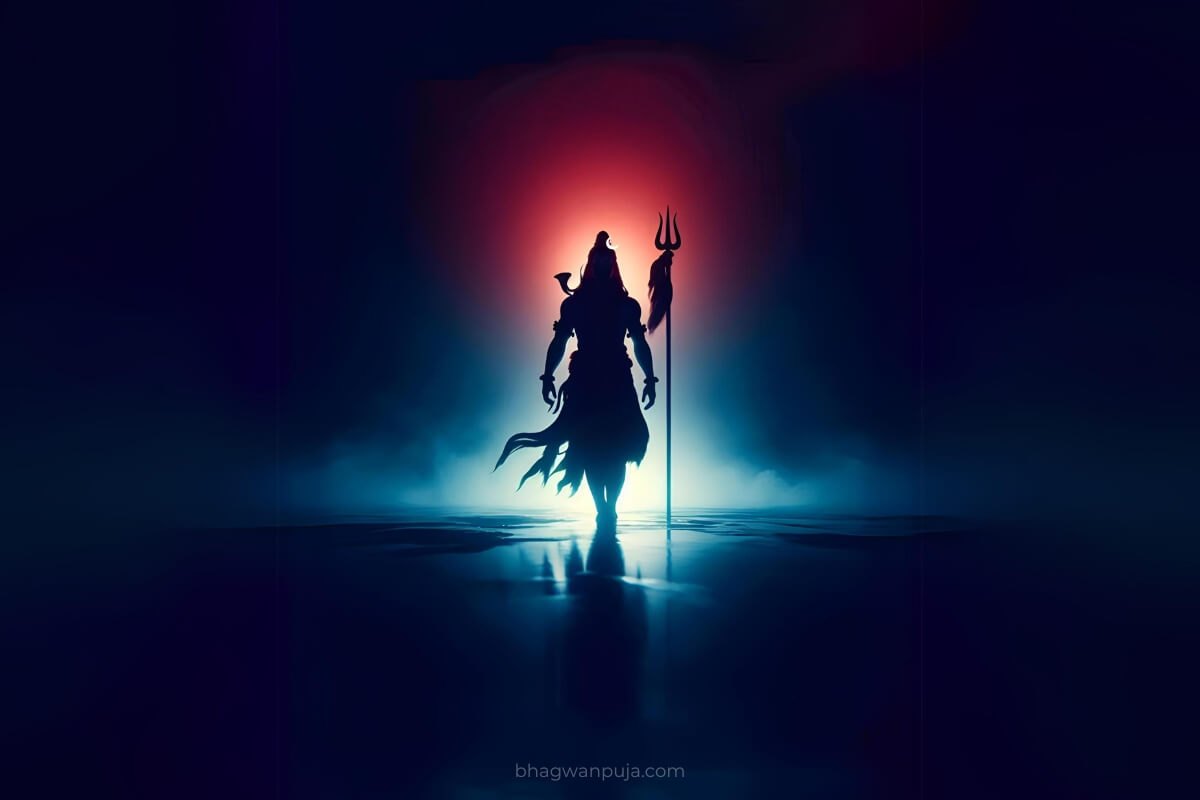
Lord Shiva, is one of the principal deities of Hinduism. Also called Mahadeva, is the supreme God in Shaivism tradition in Hinduism and also one of the chief deities as a member of the Trimurti. Lord Shiva is also identified as the God of Destruction, God of Time, Lord of Yogis, The cosmic dancer, and Patron of Yoga, Meditation, and Arts. He is the causeless auspiciousness. Lord Shiva is an embodiment of the ultimate space of enlightenment. He formed as a human to guide humans in the past, that’s why also called Adhiguru.
Who is Shiva?
Lord Shiva is known as the Destroyer within the Trimurti, the Hindu Trinity which also includes Brahma and Vishnu. According to the Shaivite tradition, Lord Shiva is the supreme lord who creates, protects, and transforms the universe. As per the Shakta tradition, the supreme Goddess is regarded as the energy and creative power and has the equal complementary partner of Shiva. He is one of the five equivalent deities in Panchayatana puja of the Smarta tradition of Hinduism. He has many aspects of benignity as well as fearsome.
In the aspect of benignity, he is depicted as an omniscient yogi who lives an ascetic life on Mount Kailash with his wife Mata Parvati, and two sons Ganesha and Kartikeya. According to his fierce aspect he is often depicted slaying demons. Shiva is also known as Adiyogi, (the first yogi) regard as the patron god of yoga, meditation, and the arts.
Attributes of Lord Shiva?
The attribution of Bhagwan Shiv is the serpent king Vasuki around his neck, the adorning crescent moon, the holy river Ganga which flows from his matted hair, the third eyes on his forehead the trishula or trident as his weapon, and his damaru. He is worshipped in the iconic form of lingam.
Lord Shiva has the pre-Vedic roots and the figure of Shiva involved an amalgamation of various older Non-Vedic and Vedic deities, including the Rigvedic storm god Rudra who may also have a non-Vedic origin.
The meaning of Saiva in Sanskrit is related to the God Shiva. This word is used as an adjective to characterize certain beliefs and practices such as Shaivism.
Other names of Bhagwan Shiv
Lord Shiva is known by many other names such as Viswanatha( Lord of the Universe), Mahadeva, Mahasu, Mahesha, Maheshvara, Shankara, Shambhu, Rudra, Bhairava, Pashupati, Trilochana, Neelakanta, Subhankara, Trilokinatha, and Ghrneshwar. The highest reverence for Shiva in Shaivism is reflected in his epithet Mahadeva.
Best Mantras and Days of Lord Shiva
In the Hindu religion, Lord Shiva is known as the god of destruction. People were doing in different ways of praying to Lord Shiva to please him, and Lord Shiva was very easily impressed. Shiva Puja involves the recitation of Shiva Mantras. These mantras are recited to win over fear fight one’s battles and come up undefeated. These mantras protect us from diseases, fears, etc. Regular recitation of these mantras in the proper way ensures that a person gets success and siddhis. These mantras make people strong from the inside to fight any battles that they pick. It helps to clean the body from any sort of negativity and makes one all the more powerful. Many of these mantras are exclusively devoted to Lord Shiva and if you decide to recite them, you will particularly feel energized and see a host of other benefits as well.
Panchakshari Shiva Mantra – ‘Om Namah Shivaya’
Means – This is the simplest mantras and is well known. It means ‘I bow to Lord Shiva‘. It is dedicated to Lord Shiva and if chanted 108 times every day, this mantras will help you purify your body and Lord Shiva will shower his blessings on you.
Rudra Mantra – ‘Om Namo Bhagwate Rudraay’
Means – This mantra will make sure all your wishes get fulfilled along with the blessings of Lord Shiva.
Shiva Gayatri Mantra – ‘Om Tatpurushaya Vidmahe Mahadevaya Dhimahi Tanno Rudrah Prachodayat’
Means – It is a form of the most powerful mantra in Hinduism, the Gayatri Mantra. Shiva Gayatri Mantra is extremely powerful, it gives you peace of mind, and that pleases Lord Shiva
Shiv Dhyaan Mantra – ‘Karcharankritam Vaa Kaayjam Karmjam Vaa Shravannayanjam Vaa Maansam Vaa Paradham I Vihitam Vihitam Vaa Sarv Metat Kshamasva Jay Jay Karunaabdhe Shree Mahadev Shambho II’
Means – This is a very powerful mantra that helps you ask for forgiveness from Lord Shiva for any sin that you may have done along the course of your life.
Maha Mrityunjaya Mantra – Om Tryambakam Yajamahe Sugandhim Pushti Vardhanam I Urvarukamiva Bandhanath Mrityormukshiya Mamritat II
Means – This extremely powerful mantra helps us escape the fear of death. Lord Shiva is known as the Lord of death and destruction, hence only he can save us from death. Family members of people dangling between life and death often recite this particular mantra for the affected to get well soon.
Ekadasha Rudra Mantra
Ekadashi Rudra mantra is a set of eleven different mantras. During Maha Shivaratri or Maha Rudra Yagnya, all of the eleven mantras if recited are very beneficial for people. These eleven mantras each correspond to one month and it is said that if you recite the one specified for your month, it turns out to be most beneficial, but reciting all eleven won’t do any harm as well.
The day on which people offer prayers to Lord Shiva is Monday. This day is for Lord Shiva and his consort Goddess Parvati. Many people can observe fast on Monday to seek blessings from Lord Shiva who will fulfill all desires.
Story Related to Lord Shiva
In Hinduism, the universe is believed to regenerate every 2.16 billion years, with Lord Shiva playing the crucial role of destroying and recreating it. As an ascetic, Shiva abstains from worldly pleasures and meditates to achieve ultimate happiness. He holds immense power, governing both the darker elements like spirits and thieves and embodying the cycle of creation and destruction. Shiva is depicted in various forms, including peacefully with his family, as the cosmic dancer Nataraja, and as Ardhanarishvara, symbolizing his dual nature of both male and female.
Shiva’s representations also highlight his complex nature as the master of both poison and medicine, reflecting his ambivalent power over snakes. Each form, whether as a yogi, meditator, or the symbol of fertility, holds sacred significance. Shiva’s diverse forms and powers are revered, demonstrating his profound influence and revered status within Hindu mythology. This intricate portrayal underscores his role in maintaining cosmic balance and exemplifies his multifaceted nature as both a destroyer and creator.
