
Close Menu
  • Home
  • Online Puja
  • Horoscopes
  • Wallpapers
    • HD Wallpaper 1
      • Bhagwan Ganesh
      • Bhagwan Shiv
    • HD Wallpaper 2
      • Bhagwan Ram
      • Bhagwan Krishna
    • HD Wallpaper 3
      • Bhagwan Vishnu
      • Bhagwan Hanuman
    • HD Wallpaper 4
      • Maa Durga
      • Bhagwan Ayyappa Swamy
  • Hindu Gods
    • Chalisa
    • Puja Vidhi
    • Bhajan
    • Vrat
  • Hindu Festivals
  • Temples
What's Hot

Sawan 2026: Start Date, End Date and Complete Shravan Calendar

July 30, 2026

Ashadha Gupt Navratri 2026: Dates, Ghatasthapana Muhurat & Significance

July 11, 2026

Makar Sankranti Charity Ideas: Daan and Social Giving

January 2, 2026
Facebook X (Twitter) Instagram
  • Home
  • About us
  • Privacy Policy
  • Disclaimer
  • Contact us
Facebook X (Twitter) Instagram Pinterest
BhagwanPujaBhagwanPuja
  • Home
  • Online Puja
  • Horoscopes
  • Wallpapers
    • HD Wallpaper 1
      • Bhagwan Ganesh
      • Bhagwan Shiv
    • HD Wallpaper 2
      • Bhagwan Ram
      • Bhagwan Krishna
    • HD Wallpaper 3
      • Bhagwan Vishnu
      • Bhagwan Hanuman
    • HD Wallpaper 4
      • Maa Durga
      • Bhagwan Ayyappa Swamy
  • Hindu Gods
    1. Chalisa
    2. Puja Vidhi
    3. Bhajan
    4. Vrat
    5. View All

    Hanuman Chalisa Explained: Lyrics, Meaning and Benefits

    August 4, 2024

    Bhagwan Kaal Bhairav Chalisa: The Sacred Hymn for Spiritual Protection

    December 10, 2023

    Bhagwan Ganesh Chalisa: Gateway to Spiritual Serenity

    December 10, 2023

    Lord Krishna Chalisa: Harmony in Verses and Spiritual Essence

    December 10, 2023

    Significance of Lord Dhanvantari on Dhanteras and Puja Vidhi

    November 9, 2023

    The Significance of Goddess Brahmacharini on Navratri | Date and Puja Vidhi

    October 15, 2023

    The Power of Pradosh Vrat: How to Perform, Benefits, and Its Spiritual Significance

    June 29, 2024

    Why Krishna Didn’t Marry Radha: The Divine Love Story

    September 2, 2025

    Mahalakshmi Puja: Understanding the Symbolism of Goddess Lakshmi

    October 28, 2024

    Who is Lord Ganesha? Mantras, Other Name & Attributes of Bhagwan Ganesha

    September 3, 2024

    Who is Lord Shiva? The Destroyer and Creator in Hindu Mythology

    August 5, 2024
  • Hindu Festivals
  • Temples
ePuja
BhagwanPujaBhagwanPuja
Home › Hindu Festivals › The Significance of Goddess Kushmanda on the Fourth Day of Navratri
Hindu Festivals

The Significance of Goddess Kushmanda on the Fourth Day of Navratri

BhagwanPuja TeamBy BhagwanPuja TeamOctober 17, 2023Updated:October 4, 2024No Comments4 Mins Read
Share Facebook Twitter Pinterest LinkedIn Tumblr Reddit Telegram Email
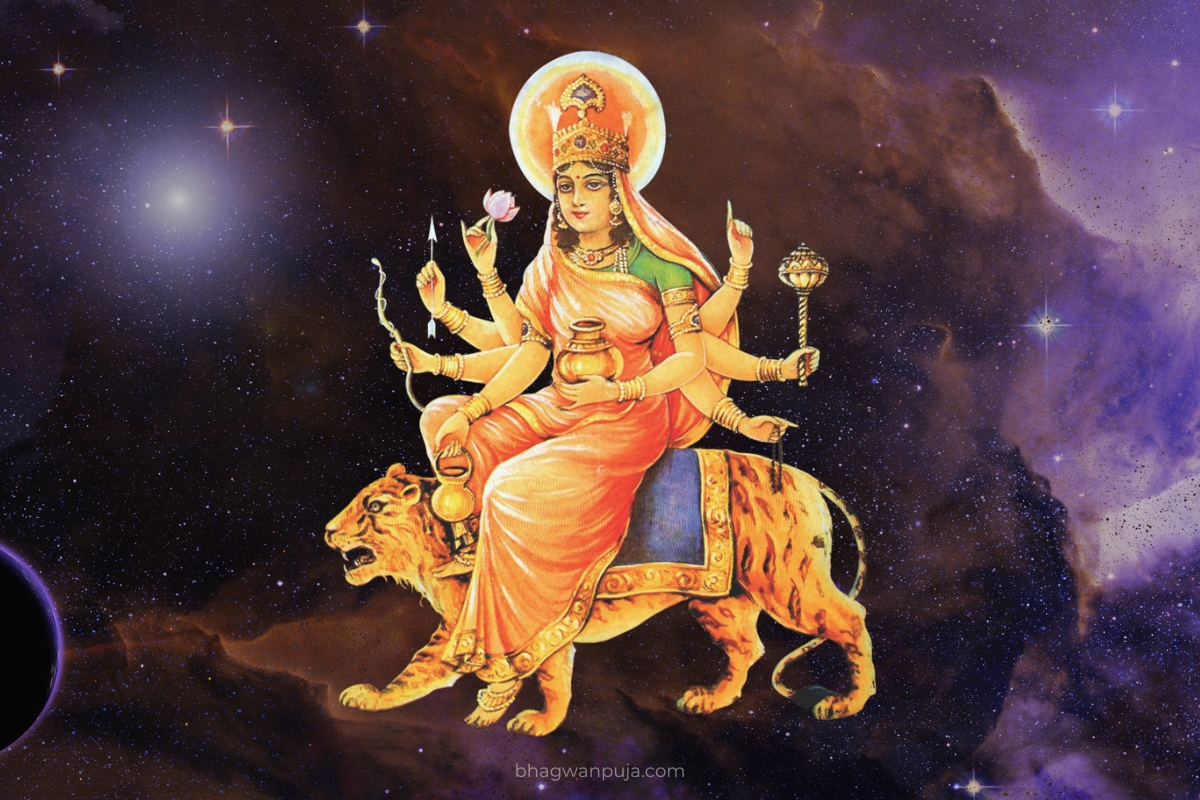
Goddess Kushmanda
Share
Facebook Twitter LinkedIn Pinterest Email

Navratri, a nine-day festival, celebrates the nine divine forms of Goddess Durga. This year, Navratri commences on Sunday, October 15, and concludes on Tuesday, October 24. In Hindu religious beliefs, the concept of Navdurga originates from Goddess Parvati, who wields supreme power among all the goddesses. On the fourth day of Navratri, we pay homage to Goddess Kushmanda, whose name symbolizes ‘Ku’ (a little), ‘Ushma’ (warmth or energy), and ‘Anda’ (cosmic egg). Goddess Kushmanda is revered as the deity of light energy and is believed to bestow health, wealth, and strength. Due to her possession of eight hands, she is also known as Asthabhuja Devi.

History of the Worship of Goddess Kushmanda

The tale of Goddess Kushmanda’s worship unfolds at a time when there was nothing but emptiness in the universe. Darkness shrouded everything, with no signs of life. Then, a ray of divine light suddenly appeared, slowly illuminating the void. Initially formless, the rays of light eventually took on a clear shape, that of a divine lady. This first being of the universe was Maa Kushmanda. Her arrival signified her ability to create the universe with her gentle smile, replacing darkness with light and breathing life into the cosmos.
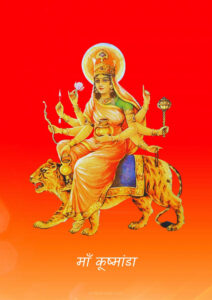
Maa Kushmanda She is also referred to as “Sakti” because she created the Sun, planets, stars, and galaxies. Seating herself in the center of the Sun, she became the source of all energy in our universe, giving life to all living beings through the sun’s rays.

Following this, Maa Kushmanda brought three divine goddesses into existence. Using the central eye on her forehead, she created ‘Mahalaxmi,’ her left eye formed ‘Mahakaali,’ and her third eye gave birth to ‘Maa Sarasvati.’ Mahakali’s body brought forth a male and female; the male was named Shiva, and the female was Maa Saraswati. Similarly, Mahalaxmi gave birth to a male, Brahma, and a female, Lakshmi.

Maa Kushmanda gazed at Mahasaraswati, who also gave birth to a male and female. The male was named Vishnu, and the female was Sakti. Following this, Maa Kushmanda offered Maa Saraswati to Brahma, Lakshmi to Vishnu, and Sakti to Shiva.

Maa Kushmanda then absorbed all three divine goddesses within herself, embodying Shakti in the form of an object of divine, powerful, and unending energy.

Maa Kushmanda Puja Date & Timing:

Maa Kushmanda Puja will take place on October 6, 2024, as part of the Navratri celebrations. The day is dedicated to worshiping Maa Kushmanda, who is believed to bring vitality and positive energy. Devotees often observe rituals and wear the color orange, symbolizing warmth, joy, and energy.

Puja Vidhi and Rituals:

To worship Goddess Kushmanda on the fourth day of Navratri, wear yellow clothing, and offer yellow sandalwood, kumkum, marigold flowers, and akshat during the puja. While reciting the mantra “Om Brihaspate Namah,” offer saffron on a betel leaf and chant one rosary of “Om Kushmandayai Namah.” Reciting the Durga Saptashati or Siddha Kunjika Stotra is especially beneficial for unmarried girls, believed to help them find a suitable groom. Perform the puja with a pure and sincere heart to seek the blessings of Maa Kushmanda for success, prosperity, and good health.

Significance of Worshiping Maa Kushmanda on the Fourth Day of Navratri:

Maa Kushmanda is the Goddess of light energy and the giver of a healthy life. The word “Kushmanda” in Sanskrit means ‘Ku’ (little), ‘Ashma’ (energy or light), and ‘Anda’ (egg). It is believed that when Lord Vishnu began creating the universe, darkness enveloped everything. Then, a formless light, akin to a goddess, spread across the cosmos when she smiled, illuminating the entire universe, planets, and all. It is also believed that she became the primary source of light, providing energy, light, and heat even to the sun.

Conclusion:

On the fourth day of Navratri, we worship Goddess Kushmanda, who presides over the Anahata Chakra. For those struggling with depression, fear, anxiety, and nervousness, devout worship of Goddess Kushmanda can bring positive energy and bestow a healthy life.

Share. Facebook Twitter Pinterest LinkedIn Tumblr Email
Previous ArticleThe Significance of Maa Chandraghanta on Navratri | Date and Puja Vidhi
Next Article The Significance of Goddess Skandamata on the Fifth Day of Navratri
BhagwanPuja Team
  • Website

The BhagwanPuja Editorial Team is a group of devoted Hindu practitioners, Vedic scholars, and religious researchers with deep knowledge of Hindu traditions, scriptures, festivals, rituals, and devotional practices. Our content is researched from authentic Hindu scriptures including the Puranas, Vedas, Upanishads, and Agamas, and is reviewed for accuracy by practicing pandits and Vedic scholars. BhagwanPuja.com has been serving devotees across India and the Hindu diaspora worldwide since 2024, providing authentic guidance on puja vidhi, festival significance, mantras, and deity information.

Related Posts

Hindu Festivals

Sawan 2026: Start Date, End Date and Complete Shravan Calendar

July 30, 2026
Hindu Festivals

Ashadha Gupt Navratri 2026: Dates, Ghatasthapana Muhurat & Significance

July 11, 2026
Hindu Festivals

Makar Sankranti Charity Ideas: Daan and Social Giving

January 2, 2026
Add A Comment
Leave A Reply Cancel Reply

Stay In Touch
  • Facebook
  • Twitter
  • Instagram
  • Pinterest
  • LinkedIn
Download HD Wallpaper
  • Bhagwan Ganesh
  • Bhagwan Hanuman
  • Bhagwan Shiv
  • Bhagwan Ram
  • Bhagwan Vishnu
  • Bhagwan Shri Krishna
  • Bhagwan Ayyappa Swamy
  • Maa Durga
Top Posts

Kashi Vishwanath Temple: A Journey Through History and Spirituality

August 4, 2024857 Views

The Significance of Maa Chandraghanta on Navratri | Date and Puja Vidhi

October 16, 2023789 Views

Significance of Lord Dhanvantari on Dhanteras and Puja Vidhi

November 9, 2023646 Views
Most Popular

Kashi Vishwanath Temple: A Journey Through History and Spirituality

August 4, 2024857 Views

The Significance of Maa Chandraghanta on Navratri | Date and Puja Vidhi

October 16, 2023789 Views

Significance of Lord Dhanvantari on Dhanteras and Puja Vidhi

November 9, 2023646 Views
Our Picks

Sawan 2026: Start Date, End Date and Complete Shravan Calendar

July 30, 2026

Ashadha Gupt Navratri 2026: Dates, Ghatasthapana Muhurat & Significance

July 11, 2026

Makar Sankranti Charity Ideas: Daan and Social Giving

January 2, 2026
Latest Wallpapers
Rameshwaram Temple Lord Shiva
Grishneshwar Temple Lord Shiva
Bhimashankar Temple Lord Shiva
Baidyanath Temple Lord Shiva
Omkareshwar Temple Lord Shiva
Trimbakeshwar Temple Lord Shiva
Facebook X (Twitter) Instagram Pinterest
  • About us
  • Privacy Policy
  • Terms & Conditions
  • Removal Request
  • Disclaimer
  • Contact us
© 2026 Bhagwanpuja.com. All rights reserved.

Type above and press Enter to search. Press Esc to cancel.