

Ashadha Gupt Navratri 2026 starts on Wednesday, 15th July and will end on the 23rd July, Thursday 2026. The Ghatasthapana mhurat is scheduled to take place during the time between 5:33 and 10:00 am on July 15 (New Times of Delhi). The nine holy nights are dedicated to Maa Durga and the 10 Mahavidyas, which are the hidden wisdom manifestations of the Divine Mother.
Contrary to Chaitra or Sharad Navratri, the festival of this type is observed in a quiet manner; this is why it’s called “Gupt” or secret Navratri. In this guide, you will find the entire day-wise calendar and exact muhurat timings puja vidhi, fasting rules, and the significance that lies behind this significant period.
Key Takeaways
- Ashadha Gupt Navratri 2026 begins on July 15 and ends with Parana on July 23rd.
- Ghatasthapana muhurat starts at 5:33 AM until 10:09 am on July 15 (Drik Panchang in New Delhi).
- The devotees worship the Das Mahavidyas, from Maa Kali on Day 1 through Matangi on Day 9 and Kamala at the end of Day 9.
- Durga Ashtami falls on July 21 and Maha Navami on July 22, 2026.
- Rituals are held in private at home, or via an experienced pandit, but not as a public celebration.
What Is Ashadha Gupt Navratri?
Ashadha Gupt Navratri is a nine-night celebration of Goddess Shakti that is observed from Pratipada until the Navami Tithi of Shukla Paksha (waxing moon) during the Hindu month of Ashadha. It falls in the months of June and July each year. “Gupt” is a word that means secret “Gupt” is a reference to secret, since the sadhana performed on these nights is kept secret.
As per the Devi Bhagavata Purana, there are four Navratris during the year. Chaitra as well as Sharad Navratri celebrations are held in open spaces by garba, pandals and other community-based events. It is believed that the Magha as well as Ashadha Navratris are Gupt Navratris that are reserved for silence prayer, mantra japa and tantra sadhana.
The festival is also known by a variety of other names throughout India:
- Gayatri Navratri in certain parts of North India
- Varahi Navratri is a festival in South India, where Goddess Varahi Amman is worshipped.
- Shakambhari Navratri within certain customs
- Guhya Navratri in Himachal Pradesh
The belief is that the sages, such as Vishwamitra, performed intense sadhana in this time of darkness to gain siddhis (spiritual powers). It is for this reason that serious sadhaks regard those nine evenings as being the most powerful time of the year to perform Shakti upasana.
Ashadha Gupt Navratri 2026 Start and End Dates
Ashadha Gupt Navratri 2026 begins on Wednesday, 15 July 2026. It begins with Ghatasthapana and concludes on the 23rd day of July 2026, and concludes with Parana (breaking the fast). The Pratipada Tithi begins at 3:02 PM the 14th of July and will end at 11:50 am on July 15, according to Drik Panchang.
Here are the most important dates in a glance:
| Event | Date & Day |
|---|---|
| Ghatasthapana (Kalash Sthapana) | Wednesday, July 15, 2026 |
| Durga Ashtami | Tuesday, July 21, 2026 |
| Maha Navami | Wednesday, July 22, 2026 |
| Navami Tithi Ends | 7:03 AM, Thursday, July 23, 2026 |
| Parana (End of Fast) | Thursday, July 23, 2026 |
Because Navami Tithi is over early in the morning of July 23, the devotees finish their havan on the 22nd of July and then perform Parana on July 23 at the sun rises.
Ghatasthapana Muhurat 2026: What Is the Right Time?
It is believed that the Ghatasthapana muhurat of Ashadha Gupt Navratri 2026 is between 5:33 AM and 10:09 am on Wednesday, 14 July (New time in Delhi). The time span of 4 hours 36 mins is considered to be the most optimal time to build the holy Kalash.
| Muhurat Detail | Timing |
|---|---|
| Ghatasthapana Muhurat | 5:33 AM to 10:09 AM, July 15, 2026 |
| Pratipada Tithi Begins | 3:12 PM, July 14, 2026 |
| Pratipada Tithi Ends | 11:50 AM, July 15, 2026 |
A couple of simple principles to keep in mind. First, make sure you perform Ghatasthapana in the morning during the time that Pratipada Tithi is in use. Also, the timings vary depending on the city, so make sure to be sure to verify your local Panchang before beginning. Ghatasthapana signifies the formal recitation of Maa Durga. Beginning it in the correct way sets the tone for the entire nine days.
Day-Wise Calendar: Navadurga and Das Mahavidya Puja Schedule
Every Day of Gupt Navratri carries a double blessing. Households worship in the 9 Navadurga forms, and sadhaks are able to invoke one Mahavidya each evening. The entire day-wise calendar for July 2026 is provided below.
| Date | Day | Navadurga Puja | Mahavidya of the Night |
|---|---|---|---|
| July 15, 2026 (Wed) | Day 1 | Ghatasthapana, Maa Shailputri | Maa Kali |
| July 16, 2026 (Thu) | Day 2 | Maa Brahmacharini | Maa Tara |
| July 17, 2026 (Fri) | Day 3 | Maa Chandraghanta & Maa Kushmanda | Maa Shodashi (Tripura Sundari) |
| July 18, 2026 (Sat) | Day 4 | Maa Skandamata | Maa Bhuvaneshwari |
| July 19, 2026 (Sun) | Day 5 | Maa Katyayani | Maa Bhairavi |
| July 20, 2026 (Mon) | Day 6 | Maa Kaalratri | Maa Chhinnamasta |
| July 21, 2026 (Tue) | Day 7 | Durga Ashtami, Maa Mahagauri | Maa Dhumavati |
| July 22, 2026 (Wed) | Day 8 | Maa Siddhidatri | Maa Baglamukhi |
| July 23, 2026 (Thu) | Day 9 | Parana (End of the Fast) | Maa Matangi & Maa Kamala |
It is important to note that July 17 has two Navadurga forms, as two Tithis are on the same sun date this year. The devotees perform puja for both Maa Chandraghanta as well as Maa Kushmanda on this Friday.
Who Are the Das Mahavidyas Worshipped in Gupt Navratri?
The Das Mahavidyas are the ten greatest wisdom goddesses from the Shakta tradition. Gupt Navratri can be considered to be the most important time to worship them. Every Mahavidya is a god with a unique cosmic power and gives an individual blessing to the worshipper.
- Maa Kali – the destroyer of ego, fear, and negative forces
- Maa Tara – the guide star who saves devotees from disaster
- Maa Shodashi (Tripura Sundari) – beauty, harmony, and fulfillment
- Maa Bhuvaneshwari is the goddess in the Universe, the giver of peace
- Maa Bhairavi – Maa Bhairavi intense discipline and control over the senses
- Maa Chhinnamasta: Self-sacrifice and awakening to the inner energy
- Maa Dhumavati – Protection from misfortune and detachment
- Maa Baglamukhi – Maa Baglamukhi’s victory over adversaries, disputes and obstacles
- Maa Matangi – Maa Matangi wisdom, speech, and mastery of art
- Maa Kamala – Maa Kamala wealth abundance, prosperity, and wealth similar to Lakshmi
For those who are not religious, simple diyas with a flower and a heartfelt prayer for each goddess bring grace. Rituals that involve deep tantric energy must be performed only under the supervision by a guru who is qualified or an experienced pandit.
Why Is Ashadha Gupt Navratri So Significant?
Its significance for Ashadha Gupt Navratri is in the timing and secretive nature. It is celebrated at the beginning of the monsoon season, and nature begins to turn inwards, and it is the perfect time to meditate, do mantra japa and inner cleansing, rather than celebrations on the outside.
Astrologically, this time period influences three strong nakshatras: Punarvasu (renewal), Pushya (nourishment and protection), and Ashlesha (transformative power). They create a unique time when the spiritual effort is believed to increase several times over.
The devotees observe these nine nights with specific goals:
- Security from the enemy, the evil eye, and concealed negative
- Court cases that require relief or involve property disputes. cases that have been pending for a long time
- Removing obstacles in the field of business, career, or marriage
- Spiritual development, siddhi mantra sadhana, as well as inner power
- Health, peace and wealth for the entire family
Since the intensity of these nights is described as intense and raw the tradition demands the privacy of those who attend. The blessings that are received in quiet, the shastras suggest are rooted more deeply.
Gupt Navratri Puja Vidhi: Step-by-Step Method for Home
You don’t require elaborate plans for observing Gupt Navratri at your home. Cleanliness, a sincere sankalp, and regular reliability are more important than expensive Samagri. Follow these easy steps:
- Get up early on the 15th of July, shower, wash, and tidy your puja room. Sprinkle Gangajal to purify.
- Set up a chowki made of wood with a red cloth. Put the idol that depicts Maa Durga on the chowki.
- Perform Ghatasthapana during the time frame of muhurat (5:33 AM until 10:30 AM). Fill a kalash up with water, put mango leaves in its mouth, then place an unwrapped coconut covered in red chunri over. Grow barley (jau) in the clay pot next to it.
- The light source is Akhand Jyoti, a lamp that is lit every day, made of pure sesame oil or ghee.
- Get sankalp by putting rice, water and a flower in your palm while saying the name of your child, gotra, and making a wish.
- Daily puja that includes kumkum, roli and akshat. Also, red flowers fruit, and bohra. Pay homage to each of the day’s Navadurga forms and Mahavidya according to the calendar below.
- Chant mantras and recite the steps. “Om Dum Durgayei Namah” is a great choice for those who are just beginning. The reading of the Durga Saptashati, or the Siddha Kunjika Stotram, daily is believed to be extremely beneficial.
- End each night with an aarti and then perform the havan ritual on Navami (July 22) and then Parana on the 23rd day of July.
If performing daily puja at home isn’t feasible because of work or travel, you can get the entire vidhi done in your name by seasoned pandits via an authentic online puja service.
Fasting Rules, Do’s and Don’ts for Gupt Navratri 2026
Fasting during Gupt Navratri is based on a similar sattvik practice like other Navratris; however, the rules of secrecy are extremely strict during this time. People who are devoted to the festival can maintain a nine-day vrat, or a the phalahar fast that includes fruits along with milk. Or, they can fast just for a few days on Ashtami as well as Navami.
| Do’s | Don’ts |
|---|---|
| Eat one sattvik meal or phalahar (fruits, milk, sabudana, kuttu) | Do not consume garlic, onion, non-veg food items, or alcohol. |
| Keep your wishes, sadhanas, and rituals secret | Do not share your puja pictures or your rituals on social networks. |
| Maintain cleanliness, celibacy, and maintain a quiet, sane speech | Avoid arguments, anger, or expressing ill will towards other people |
| The Akhand Jyoti and give daily Aarti | Cut your hair and nails for the duration of the nine days, according to tradition. |
| Perform Kanya Pujan on Ashtami or Navami | Don’t go to the midway without Parana Vidhi |
The motive for the secrecy rules is quite simple. The Gupt Navratri is a practice of inner tapasya. Tradition states that announcing it publicly dilutes the fruit. Sharing regular updates on the ritual with people you know isn’t recommended.
Maa Baglamukhi Puja on July 22: The Most Powerful Day for Protection
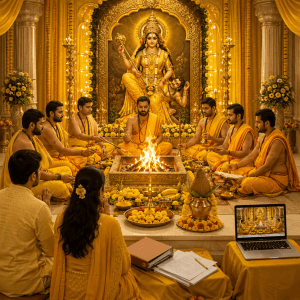 Days 8 and 9 of Ashadha Gupt Navratri, falling on Wednesday, July 22nd, 2026, will be dedicated to Maa Baglamukhi. She is the eighth Mahavidya. Also known as Pitambara Devi because she loves yellow. Yellow-colored clothes and flowers in yellow as well as turmeric and sweets made of besan, are served in her puja.
Maa Baglamukhi has been praised due to her stambhan shakti, which is the power of the gods to block or block out all that harms her lover. People seek her blessings to:
- The court wins, and in a legal dispute
- Protection against enemies, rivals, and hidden plots
- Freedom from black magic, debt, and constant worry
- The ability to win in competitions, interviews, and negotiations
The beej mantra of her, “Om Hleem Baglamukhi Sarva Dushtanam …”, is usually chanted using the help of a turmeric (haldi) mala. Because Baglamukhi sadhana follows strict guidelines and regulations, the majority of families choose to have her havan and puja performed by experienced pandits at Shakti Peeth or by an established puja service as they participate in the sankalp at home.
Frequently Asked Questions
Q1. When is Ashadha Gupt Navratri in 2026?
Ashadha Gupt Navratri 2026 starts on Wednesday, July 15, and concludes on Thursday of July 23rd 2026. Ghatasthapana is celebrated on July 15th. Durga Ashtami occurs on July 21, Maha Navami on the 22nd of July and Parana is performed in the morning of July 23rd.
Q2. How do I find the Ghatasthapana muhurat to commemorate Gupt Navratri 2026?
The Ghatasthapana muhurat runs between 5:33 and 10:09 am on July 15, 2026, according to Drik Panchang to New Delhi. The time span is approximately 4 hours and 36 minutes. The timings differ slightly depending on the city and therefore devotees must check the local Panchang prior to putting on the Kalash.
Q3. What is the reason why it’s named Gupt Navratri?
It’s called Gupt (secret) Navratri because the ceremony is private and not in public. People who are devoted to the festival adhere to their fasts, mantras and wishes in secret, in contrast to the public festivities that are celebrated at Chaitra or Sharad Navratri. The scriptures tell us that the blessings from these nine nights are multiplied when the sadhana is kept secret.
Q4. Which goddesses are worshipped in the Ashadha Gupt Navratri festival?
Devotees adore both of the 9 Navadurga forms as well as the Mahavidyas of the ten Das. The Mahavidya sequence of 2026 runs starting with Maa Kali on July 15 until Maa Matangi and Maa Kamala on the 23rd of July. Maa Baglamukhi who is worshipped on July 22 has been the most coveted god for protection.
Q5. What is Gupt Navratri different from Chaitra and Sharad Navratri?
The customs are similar; however, the mood is different. Chaitra Sharad and Sharad Navratri are celebrations that are open to the public, featuring garba, pandals and communal celebrations. Gupt Navratri during Magha or Ashadha months is an event that is private and with a focus on tantra sadhana Das Mahavidya worship and silent japa that is performed at home or by pandits.
Q6. Do householders and children be aware of Gupt Navratri?
Anyone is able to follow Ashadha Gupt Navratri in faith. Beginners should adhere to basic routines: a sattvik-fast, daily diya “Om Dum Durgayei Namah” japa and the Durga Saptashati route. The more advanced tantric rituals of the Mahavidyas must be conducted under the guidance of an experienced Guru.
Q7. What are the things you should be aware of in Gupt Navratri?
Do not make public your puja or fasting rituals, or your wishes through social media. Also, avoid garlic, onions and other non-veg foods, as well as alcohol, anger, and rude speech. Tradition also suggests against cutting nails or hair in the course of nine days of Parana and not abandoning the vrat before finishing Parana.
Q8. When do you think Parana be conducted in time for Gupt Navratri in July 2026?
Parana can be completed on the 23rd of July 2026, just at sunrise. Navami Tithi concludes at 7:03 in the morning so the havan should be complete on the 22nd of July, and the fast is officially broken on the 23rd day with Prasad, following the offering of last prayers to the goddess.
Conclusion: Invoke the Divine Mother This Gupt Navratri
Ashadha Gupt Navratri 2026, which falls from July 15 until July 23rd, is a rare nine-night period in which it is believed that the Divine Mother’s blessings are flowing in a quiet way but most strongly. If you are seeking protection, a win in a battle or just inner peace, this time and the Ghatasthapana Muhurat will give the necessary tools to start with the right intention.
If you’re unable to do the whole vidhi by yourself, BhagwanPuja.com arranges the entire Gupt Navratri along with Maa Baglamukhi puja on the internet. Professionally trained pandits conduct the entire ceremony with correct vidhi-vidhan. They also take sankalp to your name and gotra, and then you are blessed at your home. The service is completely safe and reliable.
Book your Ashadha Gupt Navratri 2026 puja today
Jai Maa Baglamukhi! May the mother’s invisible hand be with your family and you through the entire nine-night period and beyond.
